Çiğ Köfte
classic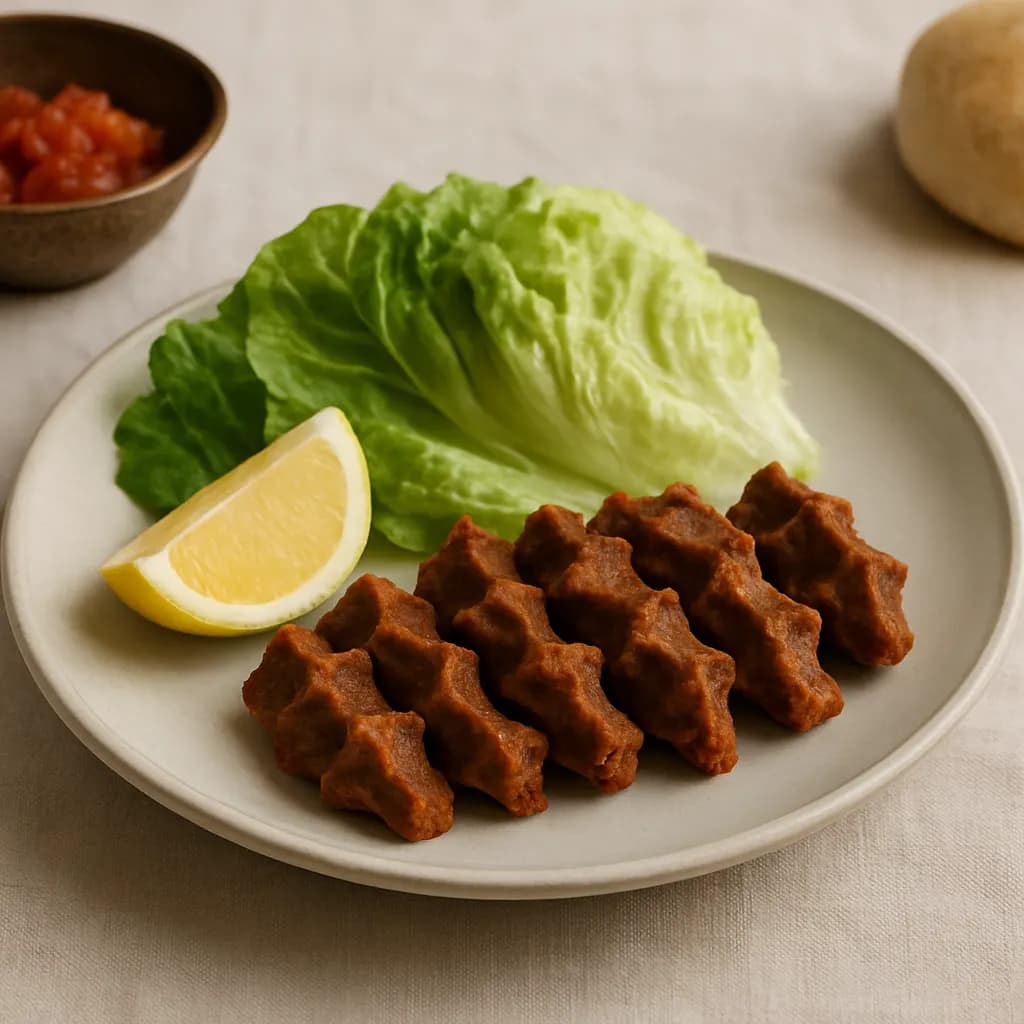
A meatless köfte originating from the traditions of Şanlıurfa and Adıyaman, made by kneading fine bulgur with isot and spices for hours. It is commonly served with lettuce and lemon.
The traditional method of long kneading matures the bulgur; in its modern commercial form, no meat is used.
- Region
- Şanlıurfa · Southeastern Anatolia
- Category
- Street Food
- Taste
- hotslightly sourisot pepper aroma
- Diet
- veganvegetarian
- Season
- all year
- Occasion
- street snack
- Service
- home stylestreet food
Table balance
Taste: hot, spice, sour
- Alongside
- Cacık or plain yogurt: dairy tames chili heat far faster than water does.
- Afterwards
- After a spice-forward plate, a plain herbal infusion clears the palate. After a light main there is room for a syrupy dessert in this meal.
- Easy to miss
- Iced water only masks the heat for a moment; it comes back quickly.
Suggestions are about taste balance, not health or nutrition advice. Scores are derived from each record's own flavour description.
Shortcuts worth knowing
Common myth
Almost all çiğ köfte sold today is meat-free; it is kneaded from bulgur, isot pepper and paste.
Pick the good one
Properly kneaded köfte does not crumble between the fingers and the bulgur is not gritty.
Pick the good one
At a street counter the most reliable measure is turnover: fast-selling stock does not sit around.
How to order
Asking for extra sauce in a sandwich usually foregrounds the sauce, not the filling; ask for it on the side.
Where this dish is made best
No match verified by field assessment yet — we never invent scores; assessments will be added with field evidence.
These are also easy to miss
- Does water or yogurt calm chili heat?
Yogurt, ayran and milk work; water does not. Capsaicin, the compound behind the heat, does not dissolve in water but does in fat and milk protein; water merely spreads it and the burn returns.
- Does çiğ köfte contain raw meat?
Almost all çiğ köfte sold commercially today is meat-free: fine bulgur, isot pepper, paste and spices kneaded together. The raw-meat version is a home and master-craft tradition, and its commercial sale is restricted by food regulation.
- How do you ask for less heat?
When ordering, saying “acısız olsun” (without heat) or “az acılı” (mildly hot) is enough; most kebabs and wraps are made to the heat you ask for. Where heat is added at the end, isot and pepper flakes sit on the table so you set it yourself.
- How are the dish names pronounced?
Turkish is read as it is written: each letter has one sound. Two letters trap the foreign reader — “c” is the English j (cacık: ja-JUK), while “ç” is ch. The dotless “ı” is a short, swallowed sound, and “ğ” mostly just softens and can be treated as silent.