Güllaç
classic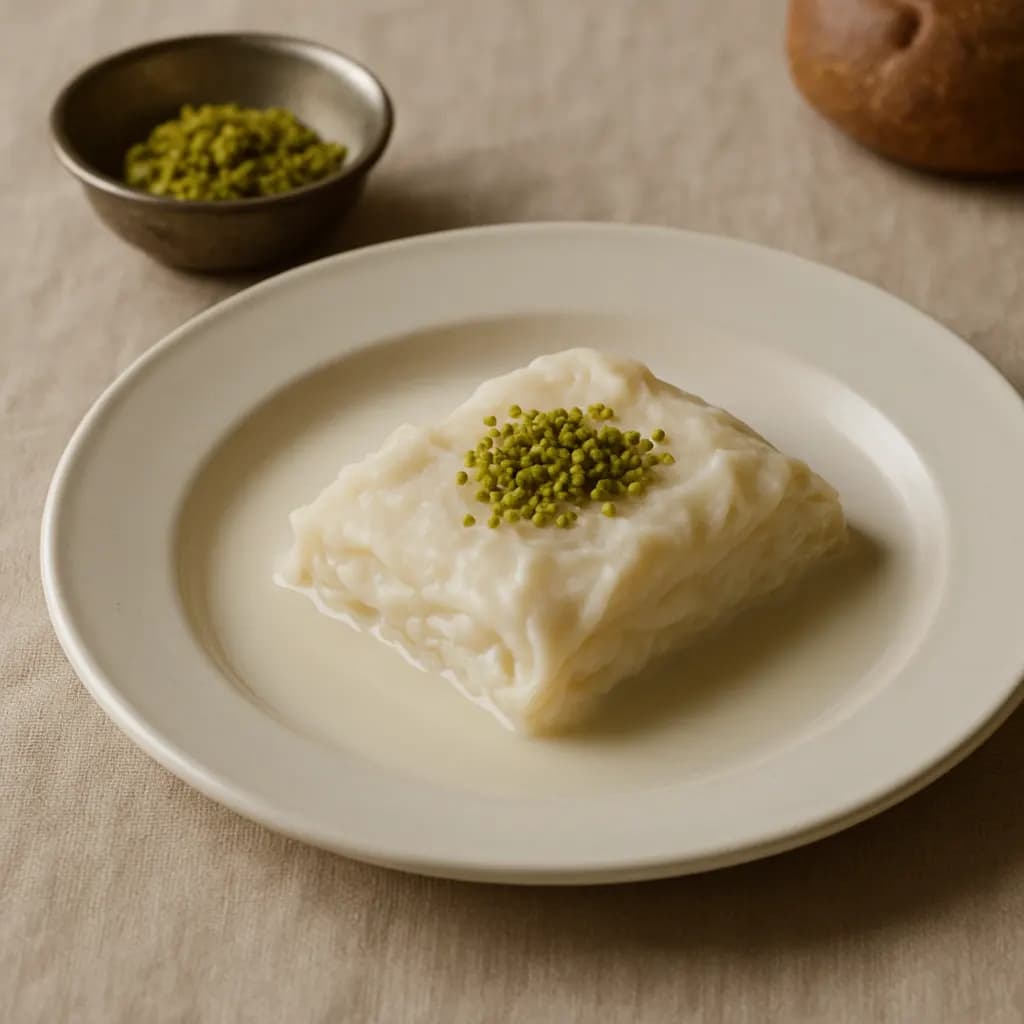
A dessert made of thin starch leaves softened in warm milk, particularly associated with Ramadan tables; it is also noted in the Niğde cuisine as a rolled version.
Hot milk softens the leaves; the milk is poured warm.
- Region
- İstanbul · Marmara
- Category
- Desserts
- Taste
- with walnutsrose-scentedmilk-based
- Diet
- vegetarian
- Season
- all year
- Occasion
- special occasionshared table
- Service
- home style
Shortcuts worth knowing
Pick the good one
Check whether the syrup has settled: good baklava does not leak syrup onto the plate and keeps its crispness.
Right time
Baklava hardens and dies in the fridge; keep it at room temperature and eat it the same day.
Common myth
Stacking a milk pudding and a syrup dessert in one meal dulls both; choose one.
Where this dish is made best
No match verified by field assessment yet — we never invent scores; assessments will be added with field evidence.
Directory venues serving this cuisine
- 3 Cores Roastery Coffee Shop — directory match
- 3/5/8 · Caddebostan — directory match
- Ab' bas — directory match
- AcupCoffee — directory match
- Adil Usta Tatlı — directory match
- Ahçıoğlu Tava Ciğer — directory match
An alphabetical directory based on each venue's own cuisine declaration; not an assessment. Data: © OpenStreetMap contributors.
These are also easy to miss
- How do meal times change in Ramadan?
In Ramadan most restaurants stay open all day; what changes is the evening. At sunset comes iftar, and for that half hour everywhere is full. To find a table at iftar you need a reservation or an early arrival; after iftar the tables are laid a second time.
- How are the dish names pronounced?
Turkish is read as it is written: each letter has one sound. Two letters trap the foreign reader — “c” is the English j (cacık: ja-JUK), while “ç” is ch. The dotless “ı” is a short, swallowed sound, and “ğ” mostly just softens and can be treated as silent.