Menemen
classic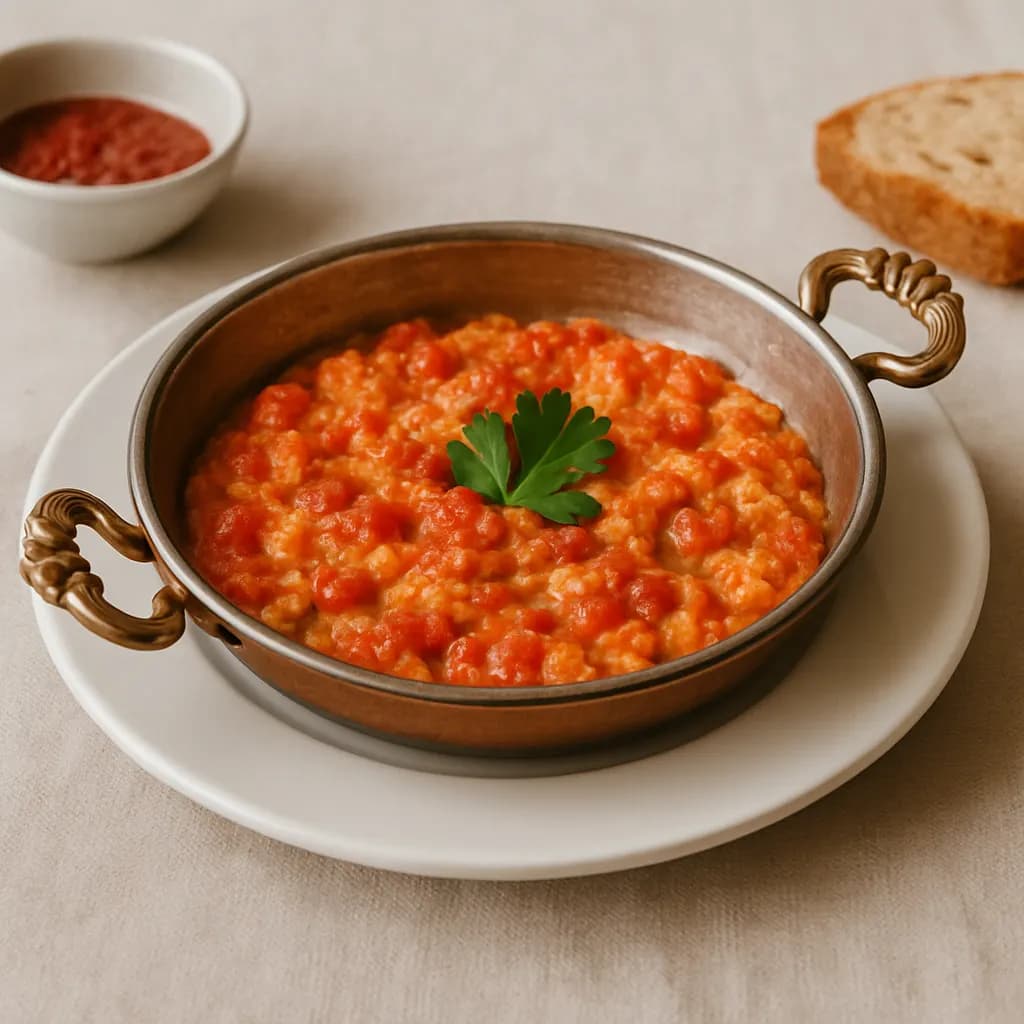
A breakfast classic where tomatoes, peppers, and eggs are cooked together; the debate over the inclusion of onions cannot be reduced to a single historical truth.
If eggs are added too early to the watery tomatoes, it becomes soupy; it is served when the eggs are cooked but not dried out.
- Region
- Aegean
- Category
- Breakfast and Meze
- Taste
- with tomatowith egg
- Diet
- gluten-freevegetarian
- Season
- all yearsummer
- Occasion
- breakfast
- Service
- tradesman's eateryhome style
Where to eat ↓1 taste stops
Table balance
- Afterwards
- After a light main there is room for a syrupy dessert in this meal.
- Easy to miss
- On a meze table balance beats variety: one yogurt-based, one olive-oil, one sharp is enough.
Suggestions are about taste balance, not health or nutrition advice. Scores are derived from each record's own flavour description.
Shortcuts worth knowing
Common myth
The onion debate is regional: the Aegean version has none, and neither way is “wrong”.
Pick the good one
The egg goes in late over low heat; stirred apart with a spoon, menemen becomes an omelette.
Pick the good one
Haydari is made with strained yogurt. If it weeps water on the plate, the yogurt was not strained.
How to order
On a meze table balance beats variety: one yogurt-based, one olive-oil, one sharp is enough.
Where this dish is made best
No match verified by field assessment yet — we never invent scores; assessments will be added with field evidence.
Directory venues serving this cuisine
- 180 Coffee & Bakery — directory match
- 26A — directory match
- 700 GRAM — directory match
- Adile Hanım Konağı · Kuloğlu — directory match
- Agora Restaurant · Tavaklı İskelesi — directory match
- Ahmetçe köyü kadın kooperatifi kafeterya — directory match
An alphabetical directory based on each venue's own cuisine declaration; not an assessment. Data: © OpenStreetMap contributors.
This dish at the taste stops
- Lades Menemen & Lokanta · Beyoğlu, İstanbul — Chicken broth soup, legendary menemen and classic pot dishes.
Culturally documented classic stops; an editorial selection, not a score. /lezzet-duraklari
These are also easy to miss
- When does breakfast start and when does it end?
Breakfast starts around seven in the morning; tradesmen's places stop at eleven, breakfast houses carry on until noon. A spread breakfast is usually served for two people at least and is a table of an hour and a half to two hours. At weekends many places serve breakfast until midday.
- How are the dish names pronounced?
Turkish is read as it is written: each letter has one sound. Two letters trap the foreign reader — “c” is the English j (cacık: ja-JUK), while “ç” is ch. The dotless “ı” is a short, swallowed sound, and “ğ” mostly just softens and can be treated as silent.