What are you in the mood for in Konya?
Tell us what you are craving and we will do the rest. The suggestions shift as you choose, and each one says why it appeared and what balances it at the table.
Pick a craving (You can choose more than one.)
Dietary preference
9 suggestions
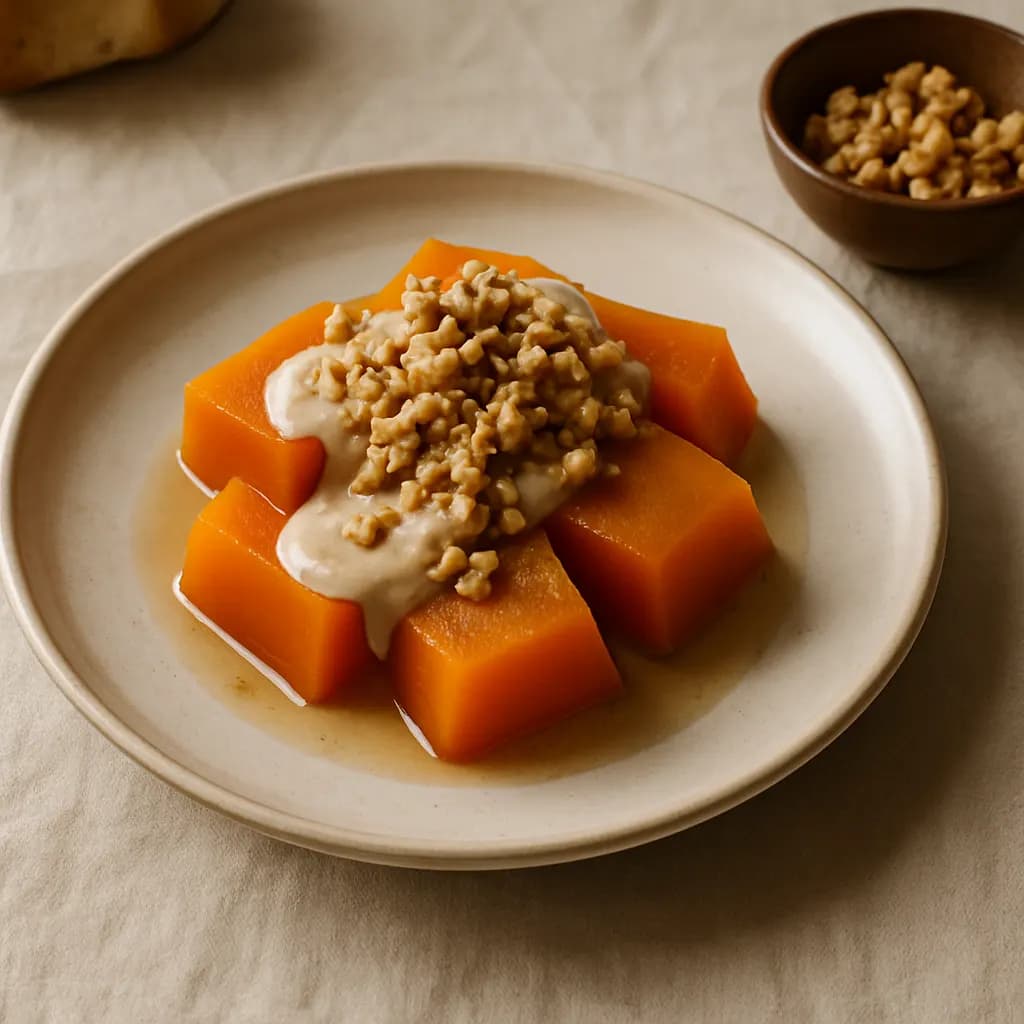
Pumpkin Dessert
in seasonA simple winter dessert made from pumpkin softened in its own juice with sugar; it is commonly served with tahini and walnuts.
Why this: Sweet → with fruit · richness
Table balance
- Alongside
- A spoon of plain clotted cream or unsalted walnut deepens it without adding weight.
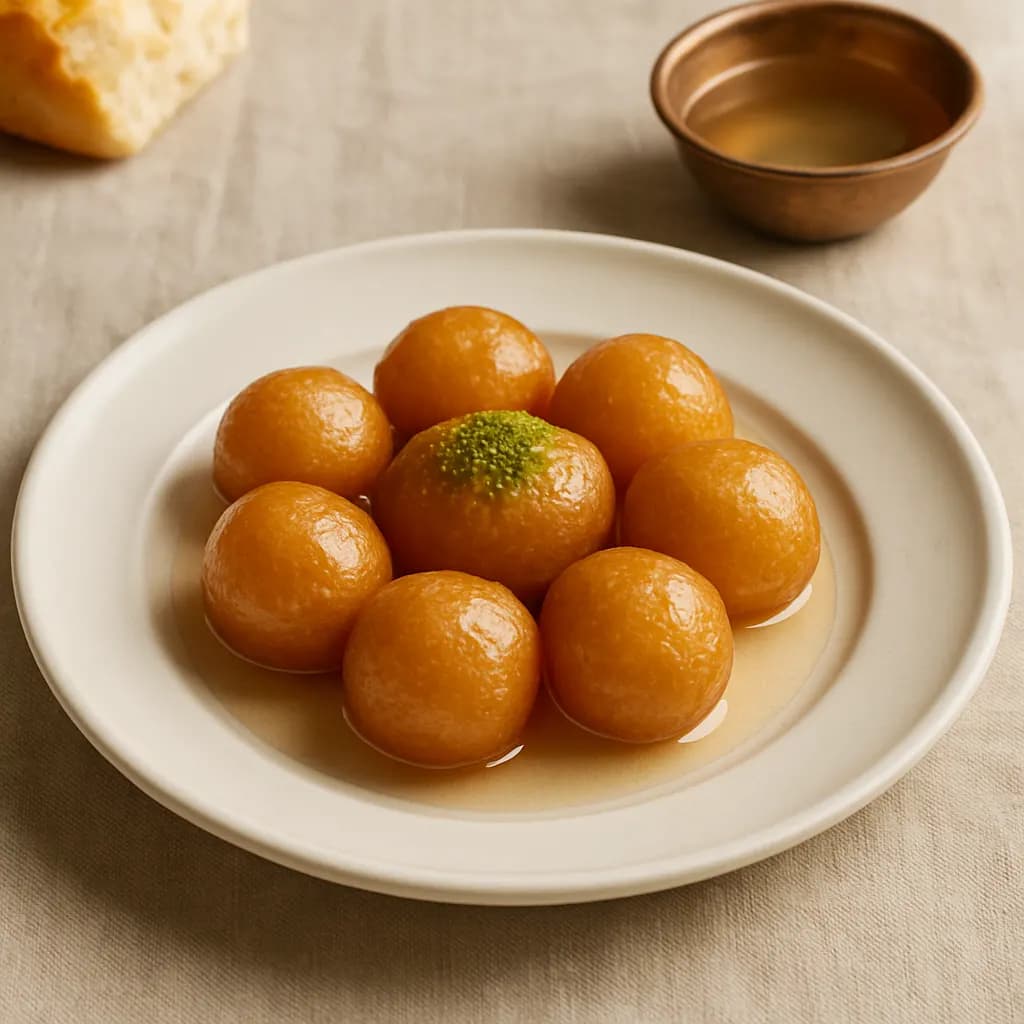
A sweet made of fried dough balls soaked in syrup; a street tradition in Izmir.
Why this: Sweet → in syrup · richness
Table balance
- Alongside
- A spoon of plain clotted cream or unsalted walnut deepens it without adding weight. Pickles or an onion-and-lemon salad: acidity cuts the fat and lightens the plate.
- To drink
- Unsweetened Turkish coffee or plain brewed tea — it resets the palate after syrup. Ayran (salted yogurt drink) or turnip juice — the classic partner to a rich meat plate.
- Easy to miss
- Skip sweet drinks next to a syrupy dessert — they flatten it. Plain water carries it better.
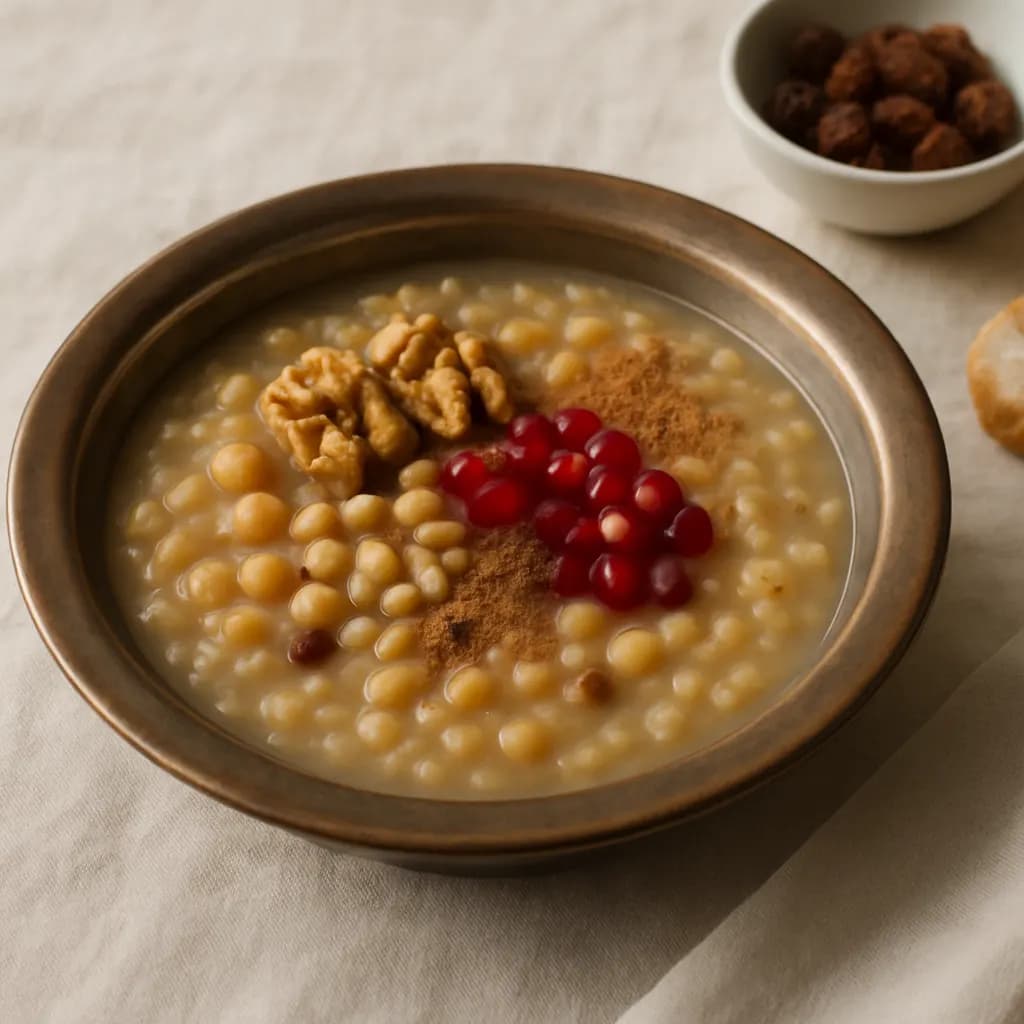
A ceremonial dessert made by cooking together wheat, legumes, and dried fruits, shared with neighbors. It symbolizes abundance and sharing, closely associated with the month of Muharram.
Why this: Sweet → with fruit
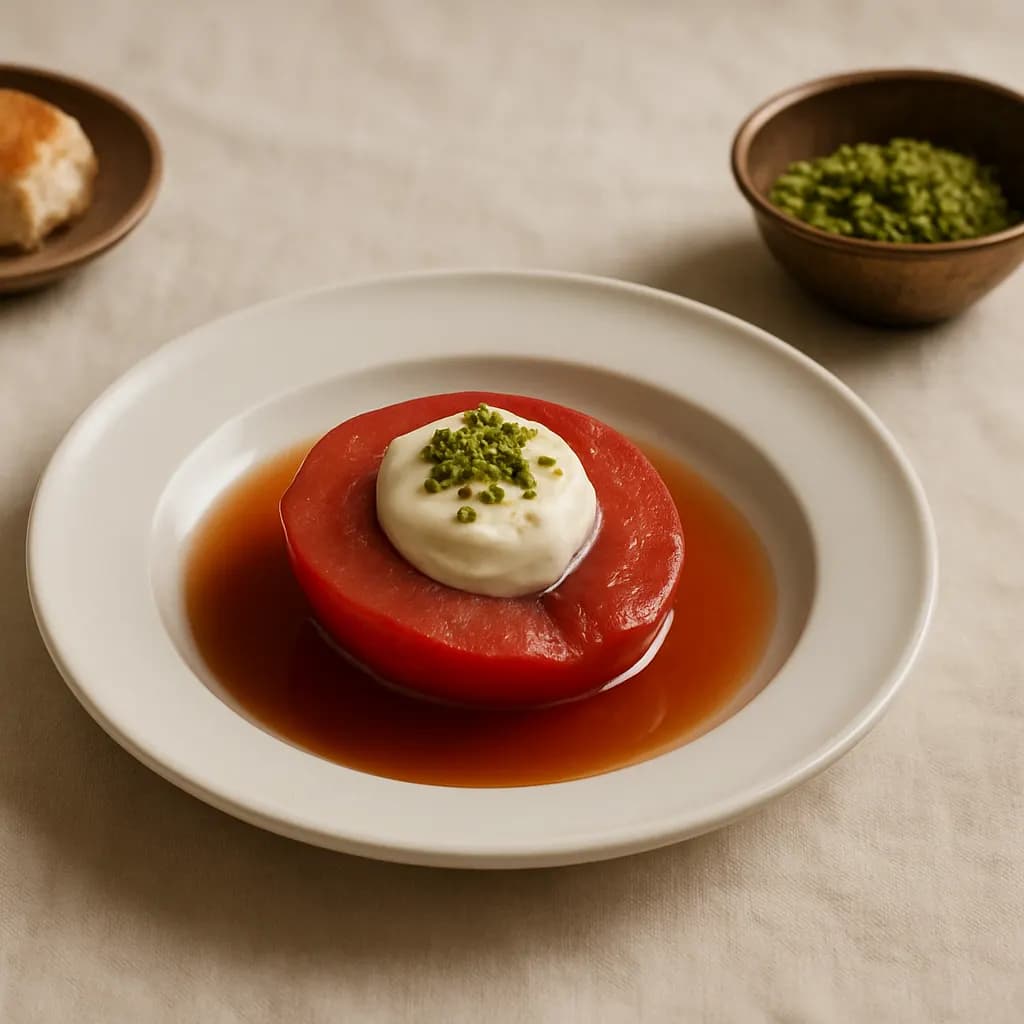
A winter dessert where the tartness of quince softens through long and gentle cooking; the natural color does not develop the same redness in every fruit.
Why this: Sweet → with fruit · spice
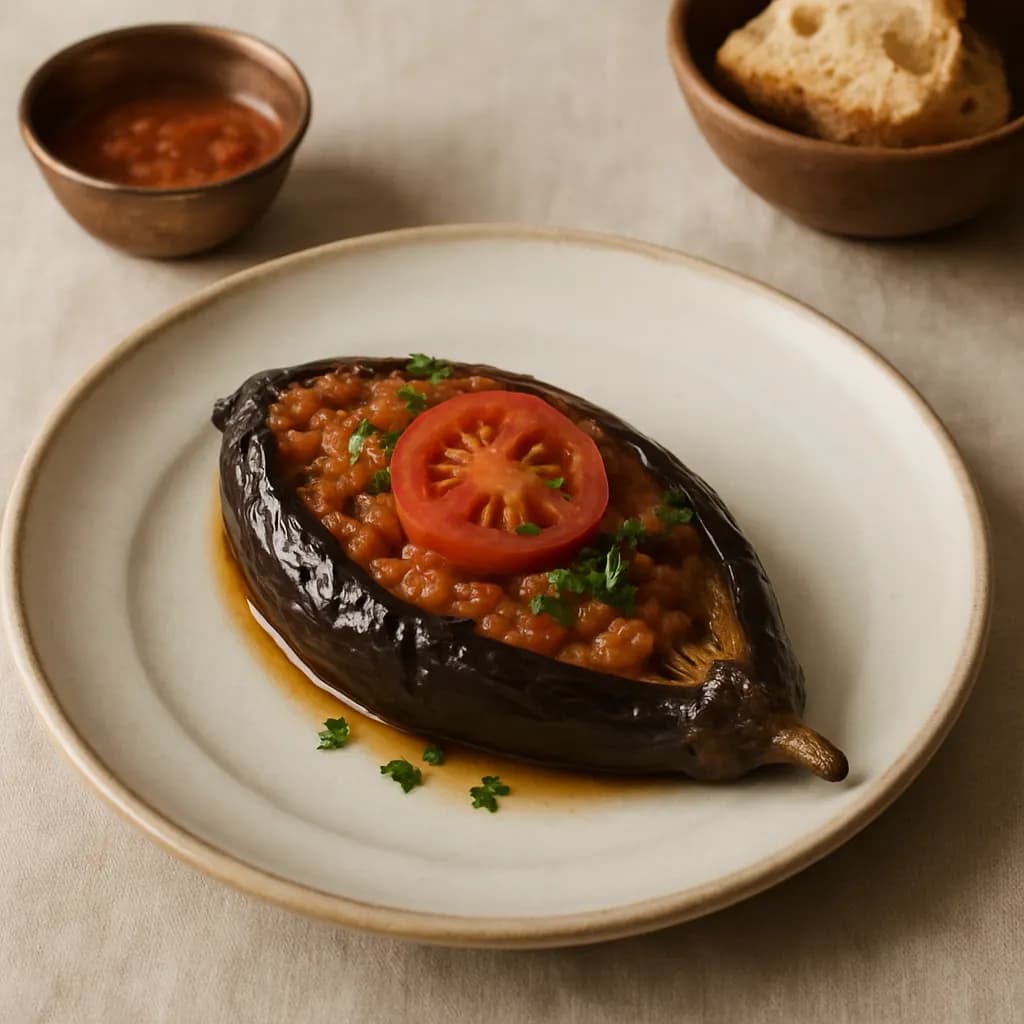
Imam Bayildi
in seasonA classic from Istanbul where eggplant meets onion, tomato, and garlic in olive oil over low heat. It is one of the most well-known representatives of the olive oil tradition and is served cold.
Why this: Sweet → sweetish · richness
Table balance
- Alongside
- A lemon wedge and fresh bread; a heavy meat plate alongside would hide the dish entirely.
- Afterwards
- After a light main there is room for a syrupy dessert in this meal.
- Easy to miss
- Olive-oil dishes are not eaten straight from the fridge; the aroma opens near room temperature.
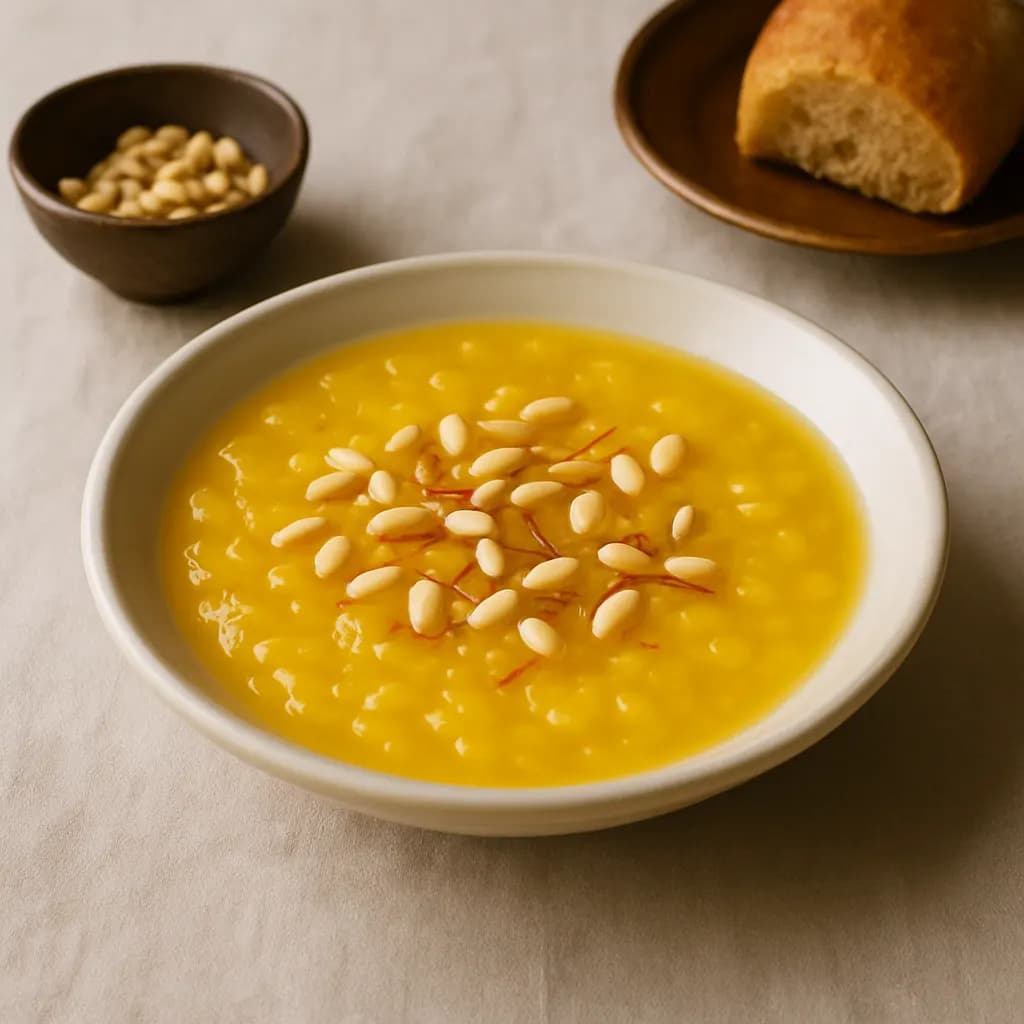
A rice pudding sweetened with syrup and colored with saffron; a historical member of wedding and religious feast tables.
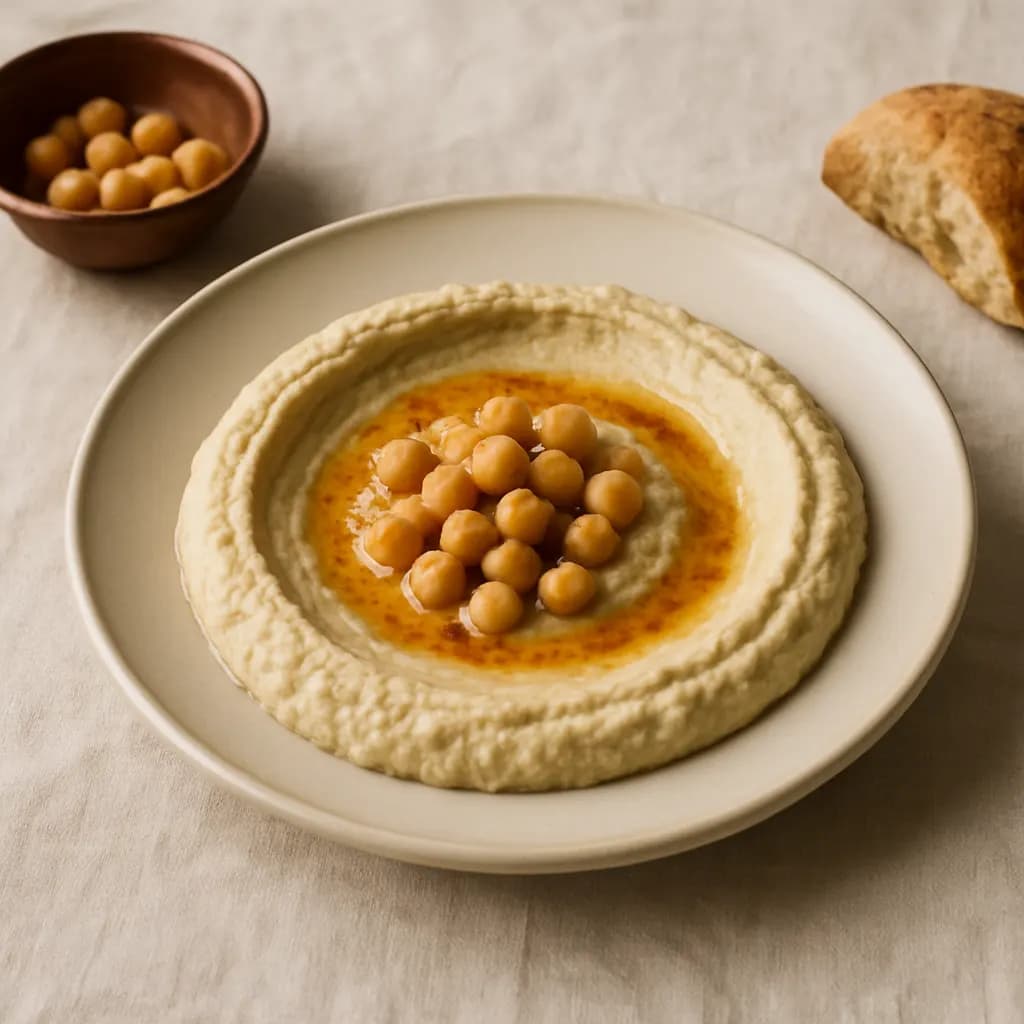
A common family of chickpeas, tahini, and lemon that transcends regional boundaries; in southern Turkey, it is also served warm and with butter.
Why this: Sweet → with tahini · sour, richness, spice
Table balance
- Alongside
- Plain rice or fresh bread rounds the acidity and steadies the plate.
- Afterwards
- After a light main there is room for a syrupy dessert in this meal.
- Easy to miss
- On a meze table balance beats variety: one yogurt-based, one olive-oil, one sharp is enough.
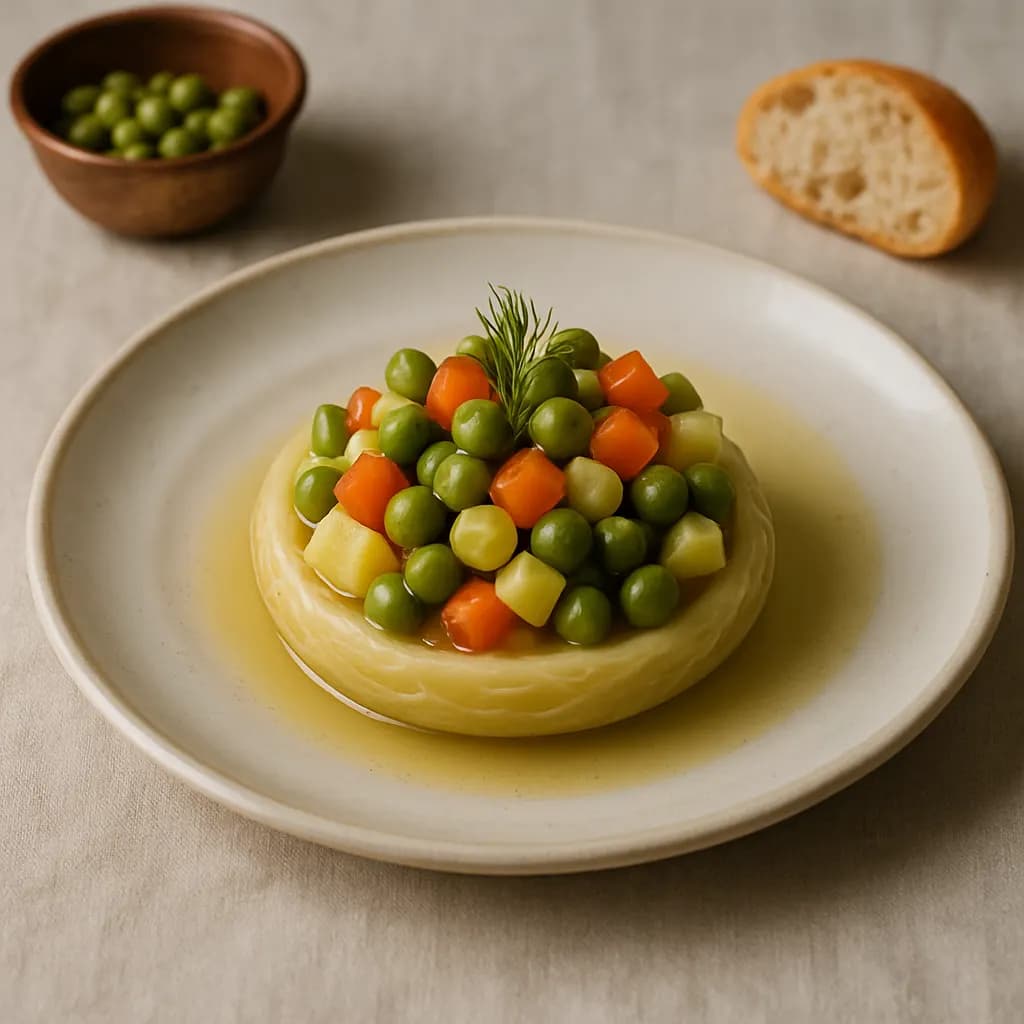
A symbol of spring; artichoke hearts are cooked in olive oil with carrots, potatoes, and peas. It is a light and elegant classic of Aegean cuisine.
Why this: Sweet → lightly sweet · richness
Table balance
- Alongside
- A lemon wedge and fresh bread; a heavy meat plate alongside would hide the dish entirely.
- Afterwards
- After a light main there is room for a syrupy dessert in this meal.
- Easy to miss
- Olive-oil dishes are not eaten straight from the fridge; the aroma opens near room temperature.
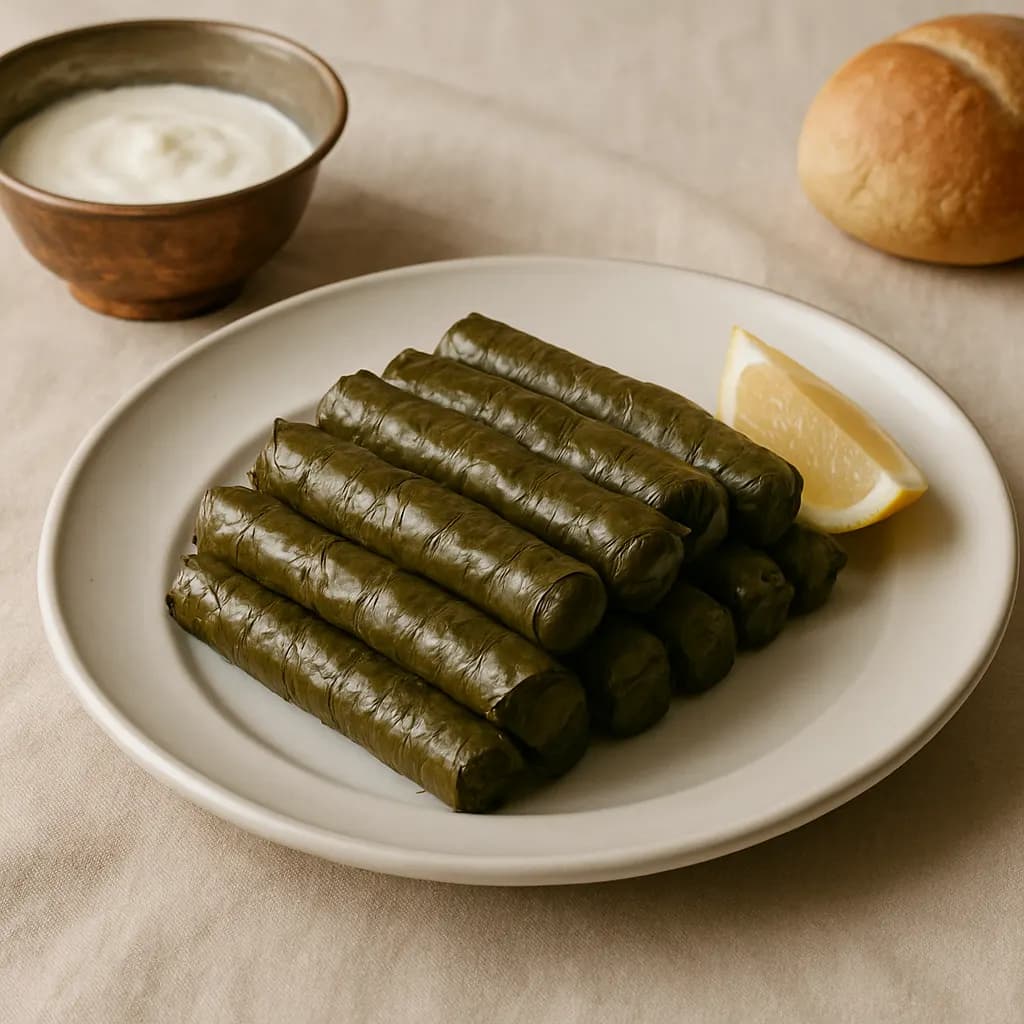
The filling made with finely chopped onion, rice, currants, and pine nuts is wrapped in vine leaves. It is an essential cold olive oil dish on Aegean and Marmara tables.
Why this: Sweet → with cinnamon · sour, richness, spice
Table balance
- Alongside
- A lemon wedge and fresh bread; a heavy meat plate alongside would hide the dish entirely.
- Afterwards
- After a light main there is room for a syrupy dessert in this meal.
- Easy to miss
- Olive-oil dishes are not eaten straight from the fridge; the aroma opens near room temperature.
Suggestions are about taste balance, not health or nutrition advice. Scores are derived from each record's own flavour description.